Calories in a homemade burger (and where they hide)
A homemade cheeseburger is about 400–600 kcal. The beef barely moves it; mayo, cheese and the bun do. Numbers by part, from USDA, and a 455 kcal burger.
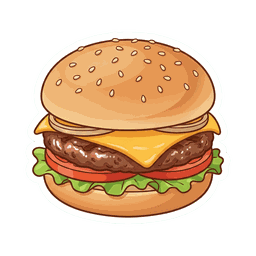
A homemade cheeseburger with a quarter-pound patty is about 400–600 kcal, depending mostly on what goes on it. With a plain bun, one slice of American cheese, ketchup and salad it’s about 420 kcal; add a tablespoon of mayo and it’s about 515; a second slice of cheese takes it near 600.
The surprise is the beef: choosing 80/20 or 93/7 mince changes the cooked burger by only about 30 kcal, because much of the fat melts out in the pan.
A classic cheeseburger, part by part
Values from USDA FoodData Central, with an 85/15 patty from 113 g (¼ lb) of raw beef, pan-fried.
| Part | Amount | Calories |
|---|---|---|
| Beef patty, cooked | 83 g (from 113 g raw) | 193 kcal |
| White burger bun | 1 (44 g) | 123 kcal |
| American cheese | 1 slice (21 g) | 78 kcal |
| Ketchup | 1 tbsp | 17 kcal |
| Lettuce, tomato, onion | a leaf, 2 slices | 11 kcal |
| Total | 422 kcal | |
| + Mayonnaise | 1 tbsp | +94 kcal |
| + a second cheese slice | 19 g cheddar | +78 kcal |
Does the beef matter?
Less than you’d think. Raw, a quarter pound of 80/20 has 287 kcal and 93/7 has 172 — a big gap. But fattier mince loses more fat in the pan, so the cooked burgers end up close:
| Mince | Raw, 113 g | Whole burger, cooked |
|---|---|---|
| 80/20 | 287 kcal | ~428 kcal |
| 85/15 | 243 kcal | 422 kcal |
| 90/10 | 199 kcal | ~412 kcal |
| 93/7 | 172 kcal | ~397 kcal |
One catch for counting: if you weigh it raw, log a raw entry; if you weigh it cooked, log a cooked entry. Logged raw, a quarter-pound 80/20 patty counts about 287 kcal, though the cooked, drained patty is nearer 200, because some fat stays in the pan. Either works — just match the entry to what you weighed (raw or cooked).
Turkey isn’t automatically lighter either: 93/7 turkey mince has the same calories as 93/7 beef. Only extra-lean or fat-free mince is a real cut.
Where the calories really hide
- Sauce. A tablespoon of mayo is 94 kcal — almost as much as the bun. Burger sauces are mostly mayo and ketchup.
- Cheese. Each slice is about 80 kcal; low-fat cheddar is about half.
- The bun. A big brioche or a sesame bun is heavier than a plain one; weigh it once.
- The oil. A dry non-stick pan is enough for a patty; oil adds about 120 kcal a tablespoon.
Our light cheeseburger: 455 kcal, 40 g protein
Our light cheeseburger isn’t a smaller burger — it’s a bigger one with about 60 kcal less than a classic with mayo (455 vs ~516). Each has a 125 g patty of 90% lean beef, a whole wheat bun, low-fat cheddar and a sauce of Greek yogurt, ketchup, mustard and pickles instead of mayo, plus tomato, lettuce and onion.
| Per burger | Classic + mayo | Our light one |
|---|---|---|
| Weight | ~230 g | 290 g |
| Calories | ~516 kcal | 455 kcal |
| Protein | ~29 g | 40 g |
The savings come from the sauce and the cheese; the extra beef and vegetables go into the extra protein and the bigger burger.
Logging a burger
At home, count it as a recipe once and log it by weight — the method is in how to count calories in homemade food. Out, the honest answer is an estimate: in Efaga you can snap the plate or type “cheeseburger with mayo and fries”, and Efi lists the parts with grams for you to check. (Your first 5 Efi counts are free, then it’s part of Efi Plus.)
FAQ
How many calories in a homemade hamburger without cheese?
Take off the cheese slice: about 345 kcal with an 85/15 patty, bun, ketchup and salad.
Is a homemade burger healthier than a restaurant one?
It’s easier to know what’s in it. Restaurant numbers vary a lot by size and sauce, so treat any count as an estimate.
Should I drain the fat?
Pan-frying already leaves some fat behind; the numbers above are for the cooked, drained patty. There’s no reliable figure for how much more blotting removes.
General information, not medical advice. Values are typical USDA figures; your brands and portions may differ.